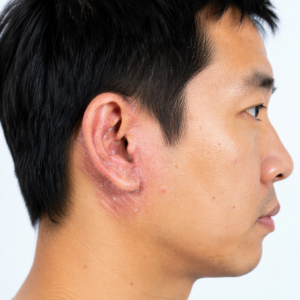

When vertigo keeps returning, it can be tempting to focus only on the spinning sensation. But if the episodes also involve hearing changes, ringing in the ears or a feeling of fullness, your ears may provide useful clues.
The inner ear is involved in both hearing and balance, which is why an ENT assessment may include a hearing test when these symptoms occur together. A Meniere’s disease hearing test can provide information about hearing function, but it is only one part of the overall assessment.
Key Takeaways
- Recurrent vertigo can have several possible causes, so the sensation of spinning alone may not identify the reason.
- Hearing loss, tinnitus or ear fullness occurring alongside vertigo can provide useful information during an ENT assessment.
- A hearing test can identify patterns of hearing loss, but it does not diagnose Meniere’s disease by itself.
- The timing and combination of your symptoms can be just as important as the hearing test result.
- Previous hearing tests can provide a useful comparison if symptoms change over time.
Why would an ENT doctor check your hearing for vertigo?
Hearing and balance are closely linked through structures in the inner ear. This does not mean that every episode of vertigo comes from the ear, but hearing symptoms can help an ENT doctor consider whether the inner ear may be involved. You may be asked whether your vertigo occurs with,
- Hearing loss or a change in hearing
- Tinnitus, such as ringing or buzzing
- A sensation of pressure or fullness in an ear
- Symptoms affecting one ear or both
- Episodes that last for a particular length of time
These details can make the assessment more specific. Repeated vertigo with hearing changes raises different questions from dizziness that occurs without any ear symptoms.
What can a hearing test actually tell you?
A standard hearing test, or audiogram, measures how well you hear sounds at different frequencies and levels.
When Meniere’s disease is being considered, the results may help identify whether there is sensorineural hearing loss and provide a baseline for comparison. However, an audiogram cannot confirm Meniere’s disease on its own.
This distinction matters because hearing loss and vertigo can occur in a number of conditions. The hearing results need to be considered alongside your symptoms, medical history and clinical examination.
Why might the timing of your symptoms matter?
happen. For example, your doctor may want to know whether hearing changes occur during a vertigo episode, whether tinnitus is present at the same time, or whether the ear feels different between attacks. Before an appointment, you could record,
- When each episode starts and how long it lasts
- Whether the sensation is spinning or more like light-headedness
- Which ear feels affected, if any
- Hearing changes, tinnitus or ear fullness
- Whether the episodes are becoming more frequent
- Recent illnesses or medication changes
A symptom record cannot establish the diagnosis, but it can help your doctor understand the pattern.
Could the hearing test point to something other than Meniere’s disease?
Yes. This is an important reason not to interpret a hearing test in isolation. Recurrent vertigo has several possible causes, and hearing findings may be relevant to some but not others. Your ENT doctor may therefore decide that hearing assessment, examination or other investigations are appropriate based on the particular combination of symptoms.
Previous hearing results can also be useful. Comparing tests over time may show whether hearing has remained stable or changed.
Frequently Asked Questions
1.Can a hearing test diagnose Meniere’s disease?
No. A hearing test provides information about hearing function and possible hearing loss, but Meniere’s disease is assessed using the wider clinical picture, including symptoms and medical evaluation.
2. Does everyone with Meniere’s disease have hearing loss?
Hearing symptoms can occur with Meniere’s disease, but recurrent vertigo has multiple possible causes. The presence or absence of hearing loss therefore needs to be interpreted alongside the rest of the clinical picture.
3. Can tinnitus and vertigo happen together?
Yes. They can occur together in some inner-ear conditions, but this combination does not by itself establish a particular diagnosis.
4. Should I have a hearing test if my vertigo keeps returning?
A hearing assessment may be appropriate, particularly when recurrent vertigo occurs alongside hearing changes, tinnitus or ear fullness. An ENT doctor can determine which investigations are relevant to your symptoms.
5. What information should I bring to a vertigo appointment?
Previous hearing tests, medical reports and a list of current medicines can be useful. It may also help to keep a record of your vertigo episodes, including their duration and any hearing or ear symptoms occurring at the same time.
Could your hearing provide part of the answer?
Recurrent vertigo can have different causes, and there is no single test that explains every episode. When vertigo occurs alongside hearing changes or other ear symptoms, however, assessing hearing can provide information that forms part of a broader ENT evaluation.
If you are in Singapore and experiencing recurrent vertigo with hearing or ear symptoms, you can discuss your concerns with Dr. Liu Jiaying at Aurion ENT & Hearing Centre. An assessment can help determine whether a hearing test or other evaluation is appropriate based on your symptoms. Consider arranging a consultation if recurring vertigo or associated hearing changes are affecting your daily life or remain unexplained.