
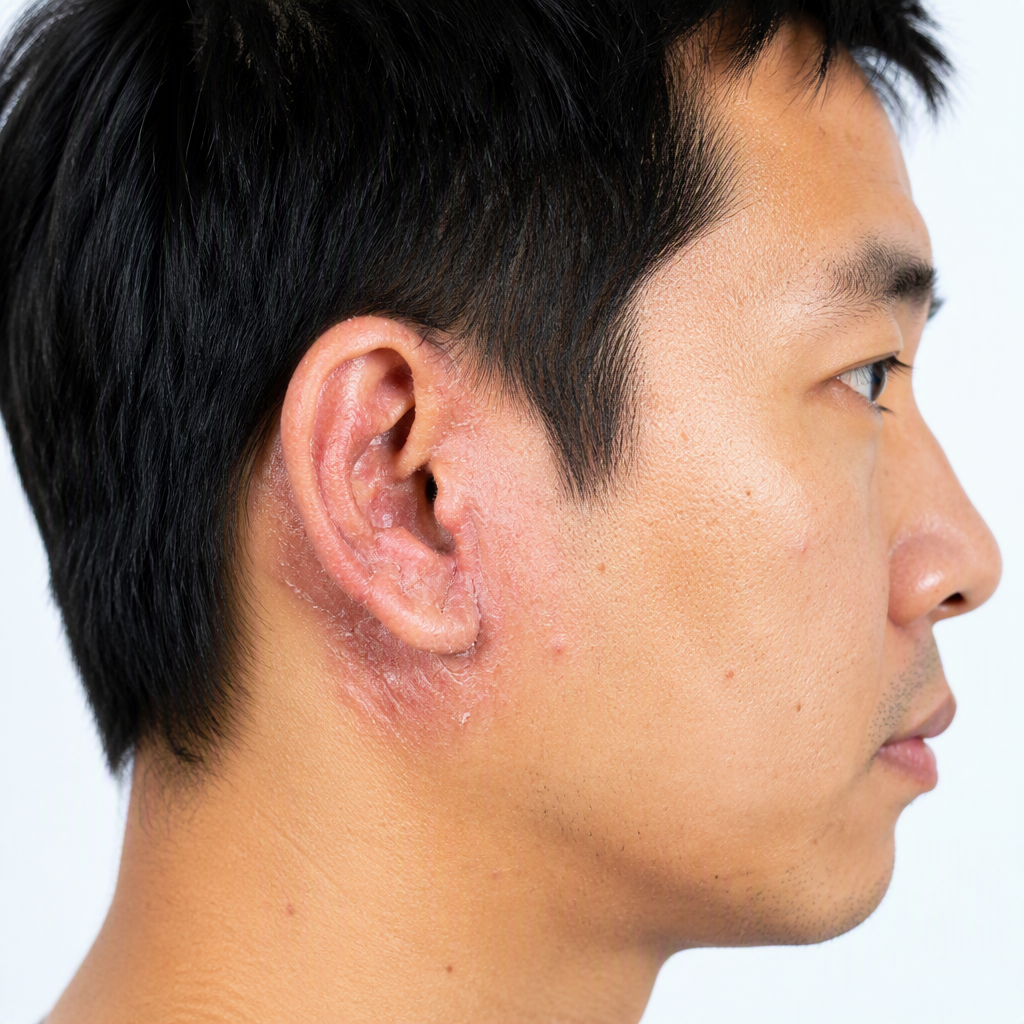
If you’ve been dealing with persistently itchy ears, flaky skin around the ear, or irritation that just doesn’t seem to go away, ear eczema could be one possible cause. Many people assume these symptoms are simply due to dry skin or earwax, but eczema can affect the ears just as it can affect other parts of the body.
The challenge is that ear eczema can look similar to other ear conditions, including infections and contact allergies. Because different conditions require different approaches, it is important to have persistent symptoms assessed rather than relying on self-treatment alone.
Ear eczema may affect the outer ear, ear folds, ear opening, ear canal and even the eardrum, with symptoms ranging from mild dryness to soreness and secondary infection.
Key Takeaways
- Ear eczema can affect both the outer ear and the ear canal.
- Symptoms may include itching, dryness, flaking, redness, soreness or cracked skin.
- Different types of eczema can affect the ears, including atopic eczema, seborrhoeic dermatitis, asteatotic eczema and contact dermatitis.
- Ear eczema may increase the risk of developing otitis externa (infection of the ear canal).
- Persistent ear discomfort, discharge, hearing changes or severe pain should be medically assessed.
What Is Ear Eczema?
Ear eczema refers to inflammation of the skin affecting different parts of the ear. It can involve:
- The earlobe
- The folds of the outer ear
- The area where the ear meets the face
- The ear opening
- The ear canal
- In some cases, the eardrum
Symptoms can range from mild irritation to more significant inflammation depending on the underlying cause and severity.
What Are the Symptoms of Ear Eczema?
People experience ear eczema differently, but common symptoms may include:
- Persistent itching
- Dry or flaky skin
- Redness or skin colour changes
- Cracked skin
- Soreness
- Irritation around or inside the ear
- Mild clear discharge during active eczema
- Thickening of the skin with repeated scratching
When eczema affects the ear canal, symptoms may feel deeper inside the ear and may sometimes be mistaken for an ear infection.
What Causes Ear Eczema?
Ear eczema is not a single condition. Several different types of eczema can affect the ears, each with different triggers.
Atopic Eczema
People with atopic eczema commonly develop eczema around the ears and behind the ears.
The skin may become dry, itchy and inflamed. Cracks can develop, particularly where the earlobe meets the face, increasing the risk of infection. In some cases, eczema extends into the ear canal.
Seborrhoeic Dermatitis
Seborrhoeic dermatitis is associated with an inflammatory reaction involving naturally occurring skin yeast. It often affects areas rich in oil glands, including:
- The scalp
- Around the eyebrows
- Along the sides of the nose
- Behind the ears
- The ear canal
People may notice greasy scales together with itching and inflammation.
Contact Dermatitis
Sometimes the problem is not eczema that develops on its own but skin reacting to something touching it. Potential triggers include:
- Earrings containing nickel
- Hearing aids or earmoulds
- Earbuds and headphones
- Hair products
- Shampoo
- Cosmetics
- Perfumes
- Topical creams
- Soap
Identifying and avoiding the trigger is often an important part of management.
Asteatotic Eczema
This form is more common in older adults. Cold weather, low humidity, frequent washing and air conditioning may contribute to excessively dry skin around the ears, leading to irritation and itching.
Can Ear Eczema Lead to Ear Infections?
Yes, it can. When eczema causes breaks in the skin, bacteria or fungi may enter more easily, increasing the risk of otitis externa, also known as swimmer’s ear.
Symptoms that may suggest an infection include:
- Increasing pain
- Swelling
- Thick yellow or green discharge
- An unpleasant smell
- Hearing becoming muffled
- Significant redness or worsening inflammation
These symptoms should be assessed by an ENT doctor as treatment may differ from eczema management alone.
Can Ear Eczema Affect Hearing?
It may. Eczema itself does not directly cause hearing loss, but inflammation, swelling, wax build-up and debris inside the ear canal can temporarily reduce hearing by blocking sound from reaching the eardrum. Infection may also contribute to temporary hearing changes. If hearing becomes noticeably reduced, it is advisable to seek medical assessment.
Is It Safe to Clean Your Ears If You Have Ear Eczema?
Many people try to relieve itching by cleaning inside their ears, but this may actually make symptoms worse.
ENT doctors often advise against inserting cotton buds deeply into the ear canal or scratching with objects such as hairpins or matches, as these may damage the skin and increase infection risk.
Instead:
- Gently clean only the outer ear.
- Dry the ears carefully after showering or swimming.
- Avoid inserting objects into the ear canal.
- Avoid excessive scratching.
Can Earbuds, Hearing Aids or Earrings Trigger Ear Eczema?
For some people, yes. Materials that remain in close contact with the skin for prolonged periods can contribute to irritation or allergic contact dermatitis. Possible triggers include:
- Nickel-containing jewellery
- Hearing aids
- Ear moulds
- Earbuds
- Earplugs
- Headphones
If symptoms consistently occur after using a particular device or accessory, an ENT specialist or dermatologist may help determine whether contact dermatitis is contributing to the problem.
How Is Ear Eczema Treated?
Treatment depends on the underlying diagnosis. Depending on the cause, management may include:
- Medical emollients to moisturise dry skin
- Prescription topical medications for inflamed skin
- Treatment for fungal or bacterial infection if present
- Identifying and avoiding contact allergens
- Management of associated skin conditions
Where eczema affects the ear canal, prescription ear drops may sometimes be required. If contact allergy is suspected, patch testing may also be recommended.
Treatment varies between individuals, so it is important not to self-diagnose persistent ear symptoms.
When Should You See an ENT Specialist?
Consider arranging a medical assessment if you experience:
- Persistent itchy ears lasting several weeks
- Recurrent ear eczema flare-ups
- Ear pain
- Discharge from the ear
- Hearing changes
- Swelling of the ear canal
- Bleeding or cracked skin that does not heal
- Symptoms that continue despite avoiding possible irritants
An examination allows the ear canal and eardrum to be assessed, helping distinguish eczema from infection or other ear conditions.
Frequently Asked Questions
1. Is ear eczema contagious?
No. Ear eczema is not contagious and cannot be spread from one person to another.
2. Can ear eczema come back?
Yes. Like many forms of eczema, symptoms may improve and flare up again over time depending on triggers and the underlying condition.
3. Can scratching make ear eczema worse?
Yes. Scratching can damage the skin barrier, increase inflammation and raise the risk of infection.
4. Is earwax causing my itchy ears?
Not always. While earwax can occasionally contribute to discomfort, persistent itching may also be due to eczema, dermatitis, allergy or infection. An examination can help identify the cause.
5. Can children develop ear eczema?
Yes. Children, particularly those with atopic eczema, may also develop eczema affecting the ears and surrounding skin.
Persistent Itchy or Irritated Ears? Get A Diagnosis
Not every itchy ear is caused by earwax or an infection. Conditions such as ear eczema, contact dermatitis and otitis externa can produce similar symptoms but may require different approaches to management.
If your symptoms are persistent, recurrent or accompanied by pain, discharge or hearing changes, an assessment by an ENT specialist can help determine the underlying cause and discuss appropriate treatment options.
At Aurion ENT & Hearing Centre, Dr Liu Jiaying sees both adults and children with ear conditions, including ear infections, hearing concerns and disorders affecting the ear canal.